May magic and an itching accelerator foot
Do you feel it? The smell of wet earth, pine needles warming up in the sun, and the sound of meltwater trickling in the ditches. It is May, and for us who love free camping, that means only one thing: The season is officially in full swing. Whether you have spent the winter finishing the insulation of a campervan, polishing the large integrated motorhome, tightening the canvas on the roof tent, or checking the tires on the camp-let, the time has come. The accelerator foot is twitching and the fingers are itching to pack the car, fill the coffee thermos, and set course for the unknown.
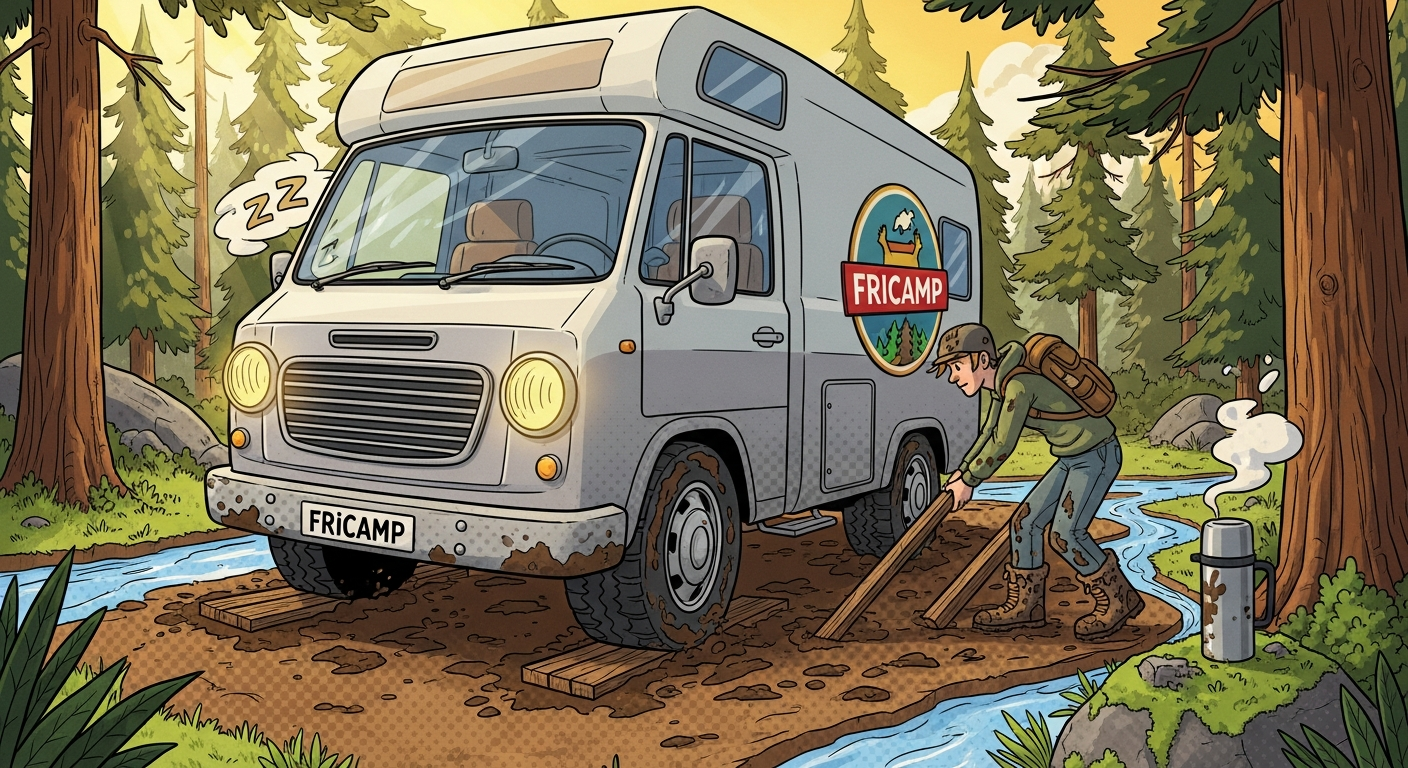
I will never forget my first trip in May a couple of years ago. The sun was shining, and I was absolutely certain that spring had taken over for real. I found a fantastic forest road, turned off, and found what looked like an idyllic, green grassy plain by a small forest lake. What I had not taken into account was the infamous "spring thaw mud". Beneath the thin layer of dry grass hid a tough, saturated sponge of frozen mud and meltwater. Before I had even managed to put the car in park, the front wheels sank in. It became a sweaty afternoon, to put it mildly, with digging, pushing, pieces of wood under the wheels, and a solid portion of humility. The lesson? Nature in May is capricious, but it is also absolutely fantastic if you know what you are doing.
The eternal hunt for the hidden gems
The first trip of the year is often about shaking off the winter hibernation, and then we would like to have some peace and quiet. But how do you actually find these hidden gems where no one else has parked before you? When the snow still lies heavy on the mountain, you have to think strategically.
In May, the lowlands, the coastal strip, and the large valleys are your best friends. Search towards the coast where spring always gets a head start, or explore forest roads in lower-lying forest areas. One of my best tips for finding new places is to use the satellite map diligently before departure. I look for dirt roads that end in a dead end near small lakes or rivers. If the road has an open pocket at the end, chances are high that you have found a gem. Remember that the Fricamp app is worth its weight in gold here. Many users add places they have found, and by zooming in on areas outside the typical traffic arteries, you can quickly find a spot large enough for your rig, whether you have a small campervan or a longer motorhome.
The right to roam on wheels – What is the deal really?
When we talk about finding hidden gems in the woods and fields, we have to address the big "elephant in the room". Because what does the right to roam actually say about free camping with a car, motorhome, roof tent, and trailer? There are indeed many misunderstandings here, and as responsible free campers, it is our duty to know the rules.
In short: The right to roam basically applies to non-motorized traffic. This means that the right to pitch a tent wherever you want (more than 150 meters from an inhabited house), actually applies to those who arrive by walking, cycling, or paddling. When we have an engine and wheels underneath us, the Road Traffic Act and the Motor Traffic Act dictate the rules of the game.
1. Driving in uncultivated land is prohibited
This is the most important rule. You cannot drive off the road and onto a meadow, down onto a beach, or into the forest to park for the night. The vehicle must always remain on the road, or on a prepared area/pocket in immediate connection to the road. Fortunately, there are thousands of fantastic dirt roads, pockets, old timber landings, and turning areas in Norway where it is legal to park. Just make sure you do not block the road for logging trucks or emergency vehicles!
2. The 150-meter rule still applies
Even if you are parked legally on a road or parking lot, the rule still applies that you must have at least 150 meters to the nearest inhabited house or cabin if you are going to sleep over. If you wish to stay overnight closer, you must nicely go and ask the landowner for permission. A friendly smile and a polite question surprisingly often result in a "Yes, of course!".
3. Resting versus camping
In Norway, you are allowed to park and sleep in your car along public roads, at rest areas, and the like for up to 24 hours (unless local signage says otherwise). But remember that there is a difference between resting and camping. If you pull out the awning, roll out the large outdoor rug, set out three chairs, a table, a grill, and hang up a clothesline, then you are camping. You should avoid this at normal rest areas along the road. Find a remote forest road instead where you are not a nuisance to anyone.
Practical tips for the first trip of the season
Before you throw yourself behind the wheel with stars in your eyes, there are some practical things you should keep in mind when going free camping in the month of May. Spring is beautiful, but it requires you to be a little prepared.
- Watch out for the spring thaw mud: As I painfully got to experience; do not drive out onto grassy plains or wet gravel that looks suspiciously soft. This applies especially to you with a heavy motorhome! A roof tent on a light passenger car has a bit more margin, but heavy vehicles dig themselves down in seconds. Stick to solid ground, and feel free to bring a pair of anti-slip mats in the trunk.
- Pack for four seasons: May is treacherous. You can sit in a t-shirt and grill hot dogs at 15:00, and chatter your teeth in minus two degrees at 03:00 at night. Remember that the ground is still cold. Check that the gas bottles are full, that the diesel heater actually works, and always bring a good, warm sleeping bag as a backup. For you in a roof tent or camp-let, a good wool blanket under the mattress to insulate against the cold from the bottom is a classic trick.
- Be careful with campfires and firewood: From 15. april to 15. september there is a general campfire ban in Norway. You can still light a fire where it obviously cannot pose a fire hazard (for example on snow, safely on bare rock after rain, or at approved fire pits), but be extremely careful. Another tip is to bring dry firewood from home. Twigs and branches you find in the forest in May are often damp from meltwater and give more smoke than heat.
- Always have Vipps for toll roads: Many of the best hidden gems are located along private forest roads. These often require a toll. Always have the app ready, or some loose change in the glove compartment, and pay with pleasure. This contributes to landowners keeping the roads open for us free campers.
Ready for a trip?
The first free camp of the year is always the best, regardless of whether everything goes according to plan or if you have to improvise along the way. It is now that we lay the foundation for the summer's adventures. So bring out the Fricamp app, zoom in on an area you have never been before, look for a promising dirt road, and get ready for the year's first sunrise coffee.
Remember to take all your trash home with you (including toilet paper – use a small doggy bag!), respect nature, and wave to the other free campers you meet on the road. See you out there in the spring sun!