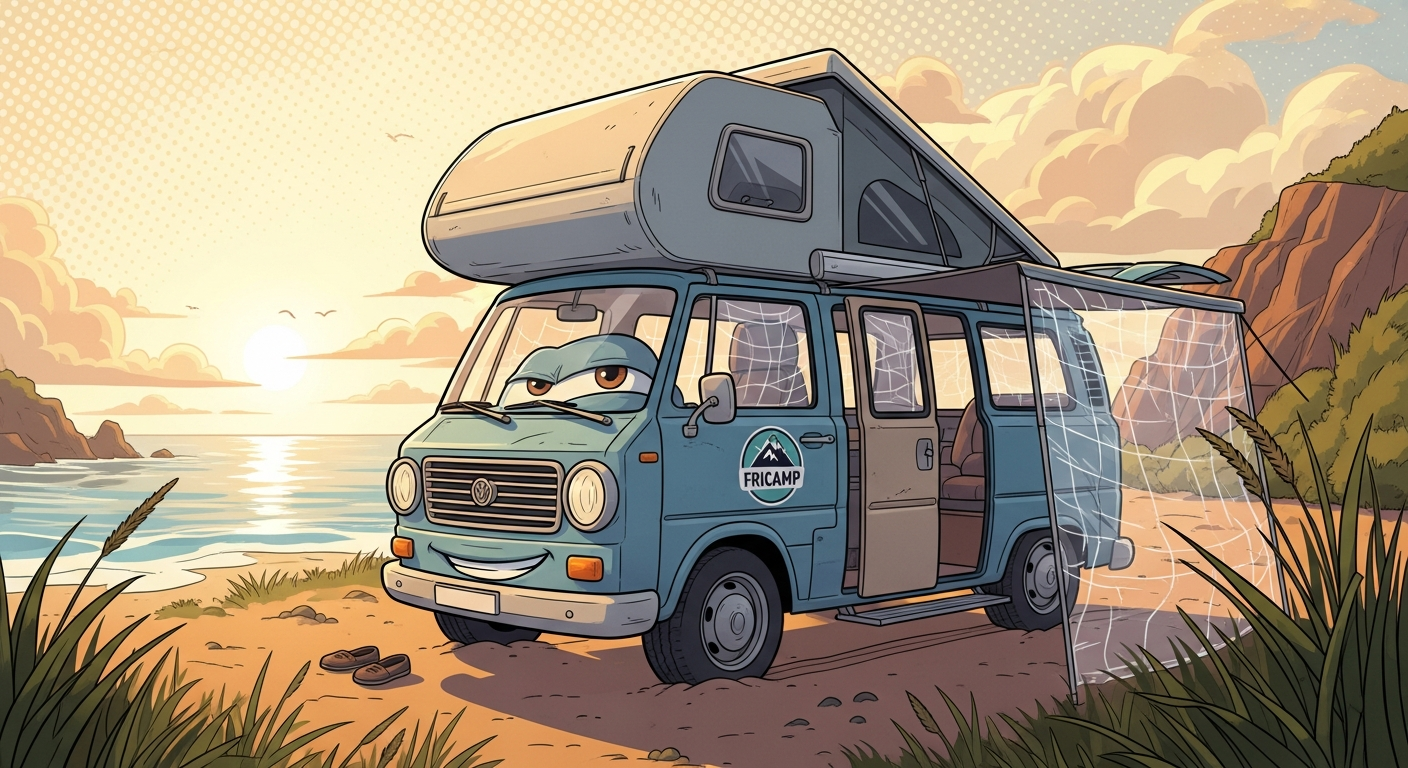
Summer is finally here!
Can you feel it? The unmistakable smell of saltwater in the air, the sound of seagulls arguing in the distance, and the feeling of kicking off your shoes to feel the sand between your toes. June marks the official start of the summer's free camping adventures for many of us. The spring mud has dried up, the roads are clear, and it is time to point the hood towards the sea.
Whether you navigate the country roads in a full-blooded motorhome, wind your way out on narrow gravel roads in an agile campervan, or have popped up the roof tent and the camp-let for the season, the coast is a natural magnet right now. But the transition to summer heat and coastal nature also presents some classic challenges. Let us talk about how we maximize the experience, keep the temperature down in the car, and not least – how we keep the bloodsuckers at bay.
Coastal camping with a roof tent: Front row to the sea
To park the car, loosen a few straps, and pop up the bedroom with a direct view of Atlanterhavet or the perfectly still Oslofjorden... That is to me the very definition of free camping bliss. With a roof tent you get incredibly close to the elements, while at the same time sleeping high above the damp ground and creepy-crawlies.
Coastal camping does, however, require you to think a little differently than when parked in a sheltered forest. Here, the wind is the boss. Parking incorrectly on a windswept point can turn the romantic night into something that feels more like sleeping inside a tumble dryer. Here are some tips from someone who has lain awake from flapping tent canvas more than once:
- Check the wind direction carefully: Use the weather forecast actively and find out where the wind will blow during the night. Park the car so it withstands the wind as best as possible. For most roof tents (especially hard-shell), it is a massive advantage to let the hard roof or the most aerodynamic side point towards the wind. It significantly reduces noise and wear and tear.
- Use the terrain: In the Fricamp app, I love zooming in on the satellite map to look for natural windbreaks. A small crag, a cluster of windswept pine trees, or a large rock can be all that is needed to break the worst of the wind, while you still keep the panoramic view.
- Leveling is alpha and omega: By the coast, there are often smooth rocks and uneven terrain. Since you are sleeping on the roof of the car, even a small incline will be very noticeable. Invest in a good pair of leveling blocks, and use the level function on your phone to ensure the car is completely level before setting up camp. Nothing is worse than waking up to find you and your partner plastered into one corner of the tent.
The battle against the sauna: Ventilation in the campervan
Let's shift gears to those of us who sleep inside steel constructions. Sunrise at 04:30 in June is incredibly beautiful, right up until you jolt awake to find your campervan has turned into a rolling oven. Summer camping requires a solid strategy for ventilation.
The basic principle for keeping a van cool is a cross-breeze. Hot air rises, so the trick is to let the hot air out at the top, and pull the cooler air in from the bottom (or from the shady side of the car).
- The fan is your best friend: If you have a roof fan (like Maxxair or Fiamma), use it to pull air out (exhaust) on hot days. For this to work effectively, you must open a window further down in the car. It creates a vacuum that pulls fresh, cooler air in from the outside and up through the living area.
- Ventilation grilles for the side windows: One of my personal favorite investments is custom ventilation grilles that are inserted into the windows of the driver and passenger doors in the front. They are shaped so that rain does not get in, but allow a steady stream of air. Perfect for creating cross-ventilation in combination with the roof hatch.
- Insulation works both ways: Many people only think of insulation to keep the heat in during winter, but it is just as important for keeping the sun's heat out. Use thermal mats on all the windows in the cab! The front window surfaces act like a massive greenhouse. If you cover them on the outside, you prevent the heat from even penetrating the glass.
Mosquitoes and midges: How to secure your night's sleep
It is the great Norwegian outdoor paradox: We wait for summer for months, and when it finally arrives, we share it with billions of bloodsucking insects. Whether you roll out in a motorhome, hang out in the roof tent, or have packed the camp-let, the mosquito is a common enemy. And if you go to Vestlandet or Nord-Norge, the midges are ready to take over the shift.
A single mosquito inside the sleeping cabin can ruin a whole night's sleep. Here are my best free camper hacks for a bite-free trip:
- Magnetic mosquito net for the sliding door: For campervan owners, there is nothing that beats a custom-made, magnetic mosquito net for the main door and the rear doors. You can leave the doors wide open all evening to enjoy the sound of the waves, while insects are effectively kept out. It costs a bit, but it is worth every single penny.
- Patch the holes NOW: For those of you with roof tents and camp-lets – check the mosquito netting before you leave! A tiny hole is all it takes for the midges to invite themselves to a party. Have you gotten a tear in the net? A layer of clear nail polish or a tiny drop of superglue can permanently seal small holes. For larger tears, transparent repair tape (like Tenacious Tape) works excellently.
- Create a smokescreen: Mosquito coils and Thermacell are great aids when you sit outside the car. Another good, old-fashioned trick is to throw some twigs of fresh juniper or heather onto the evening campfire (if it is allowed to light a fire where you are). The smoke settles over the camp and naturally keeps the creepy-crawlies away.
Be considerate of vulnerable coastal nature
Before we pack the car and roll out into the summer night, we need to have a small, but important talk about the right to roam along the coast. Our coastal nature is beautiful, but it is also vulnerable. Sand dunes and sea thrift do not handle heavy motorhome wheels well. When you use the Fricamp app to find the dream spot, always remember the 150-meter rule from inhabited houses and cabins. Stick to prepared surfaces or gravel/rock, and never let your tires touch vulnerable beach flora.
We free campers leave nothing behind but tire tracks (and preferably not even that, if we park on asphalt or gravel). If you take a bag of trash you find on the shore with you when you leave, you are not just a good free camper – you are an everyday hero.
This week's Fricamp tip
Get ready for the weekend! Open the Fricamp app now, filter the map along your favorite coastline, and look for those small pockets of gravel road that end by the sea. Have you found a fantastic coastal gem, or perhaps an idyllic, windless cove? Then share it in the app, so we can all benefit from the fantastic community we have built up. But remember – the mosquito spray is not on the map, you have to remember to pack that yourself!
Have a great summer, and have a great trip out to the open sea!