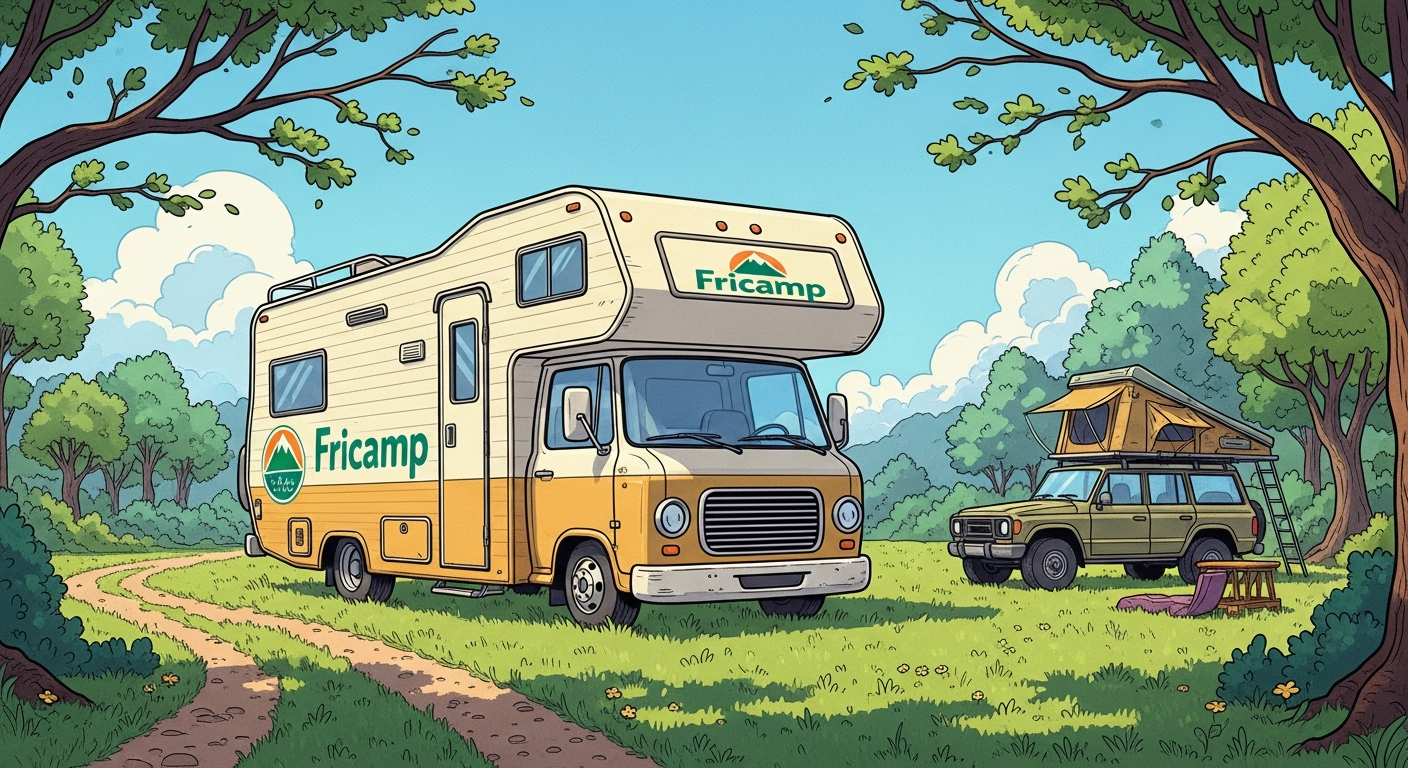
The smell of spring and the sound of crunching gravel
May. Is there really a better month for us who love sleeping outside? The trees have just started to get their light green veil, the birds are making an unparalleled racket from four o'clock in the morning, and the air has that unmistakable smell of damp earth and new life. For many, the camping season starts now, and the well-known spots along the coast quickly fill up with large, white motorhomes. But for us with roof tents? We have a secret weapon.
I remember my first May trip with the roof tent a couple of years ago. While 'everyone else' was fighting for the best asphalt spots down by the fjord, I engaged the four-wheel drive on the station wagon and aimed for a toll road deep in the forest. The Fricamp app had shown a small, green dot by a forest lake. A user had written: 'Narrow road up, not recommended for vehicles over 6 meters, but magical for smaller cars.' It is exactly these kinds of reviews we roof tent enthusiasts live for!
The roof tent advantage: Your ticket to the unknown gems
The biggest advantage we have is flexibility. Where a campervan might struggle with low ground clearance, and a large motorhome cannot get through at all due to overhanging branches, a completely ordinary passenger car with a 'box' on the roof can sneak its way through almost anywhere. This means that the truly unknown gems – the old log landings, the grass-covered turning spots at the end of a forest road, and the small pockets along rushing spring rivers – are ours for the weekend.
When you are going to find these spots for the season's first trip, my best tip is to use the map function in the Fricamp app actively. Zoom in on the gravel roads that lead away from the main roads. Look for spots with few reviews, or spots where it is specifically mentioned that access is demanding. In any case, be prepared to pay a little in toll fees. Vipps is your best friend here! Many private forest roads cost a fifty-kroner note to drive onto, and that is money well spent to get a whole pond to yourself.
The right to roam: Tent or vehicle?
Then there is this thing with the right to roam, then. This is a topic that causes a lot of headaches, especially for us who sleep on the car. Are we a tent, or are we a vehicle? The answer is that legally speaking, as long as the tent is attached to the car, you are considered a vehicle when it comes to where you can position yourself.
Here are the most important rules to remember for free camping with a roof tent in May:
- Motorized traffic in uncultivated land: Even though the right to roam allows you to tent in uncultivated land, it does not allow you to drive the car there. The car must always be parked on a legal road, parking lot, or developed pocket along the road. You can therefore not drive the car out onto the meadow or down to the beach to pitch the roof tent.
- The 150-meter rule still applies: Even if you sleep on the roof, you must respect the distance to inhabited houses and cabins. Make sure you are at least 150 meters away, and ensure that you are not a nuisance.
- Do not block agriculture and forestry: In May, there is often high activity in agriculture and forestry. If you find a beautiful, level spot at the end of a gravel road, be absolutely sure that it is not a turning spot for tractors or logging trucks. Are you in doubt? Ask the local farmer, or find another place.
Spring mud, frost heaves, and common sense
Even though May is beautiful, it is also the month for mud. Meltwater and spring rain mean that places that are as hard as stone in July can be like quicksand now. I myself have had to use spruce branches and rubber mats to get grip when I a bit too confidently parked on what looked like a solid grassy plain, but which turned out to be a bog in disguise.
My advice: Always get out of the car and feel the ground before you park for the evening. Do you jump up and down and the ground feels like a trampoline? Find another place. And remember leveling blocks! Just because we do not have a kitchen that needs to be level for the refrigerator to work, does not mean it is pleasant to sleep with blood rushing down to your head. Roof tents are fantastic, but a flat surface is still alpha and omega for a good night's sleep.
Packing tips for the first May trip
Before you fold up the tent and fire up the coffee burner, let's talk a bit about temperatures. May can offer 20 degrees Celsius during the day, and night frost when the sun goes down. The roof tent is not insulated like a motorhome.
- Bring the winter bag: Leave the summer bag at home a little longer. It is always better to open up the sleeping bag if you get too warm, than to lie there chattering your teeth at three in the morning.
- Bottom insulation: The cold often comes from below. Feel free to place a wool blanket under the mattress, or use a thin foam sleeping pad for extra insulation against the aluminum base.
- Drying cloth: The morning dew is heavy in the spring. Always bring a good microfiber cloth to wipe over the tent fabric (especially if you have a hardshell tent) before you pack it up, so you avoid mildew.
The first trip of the season is not about traveling as far as possible, but about feeling alive again after a long winter. So check the tire pressure, roll out the ladder, and find your own little spring gem on Fricamp. Maybe we will see each other on a muddy gravel road out there!